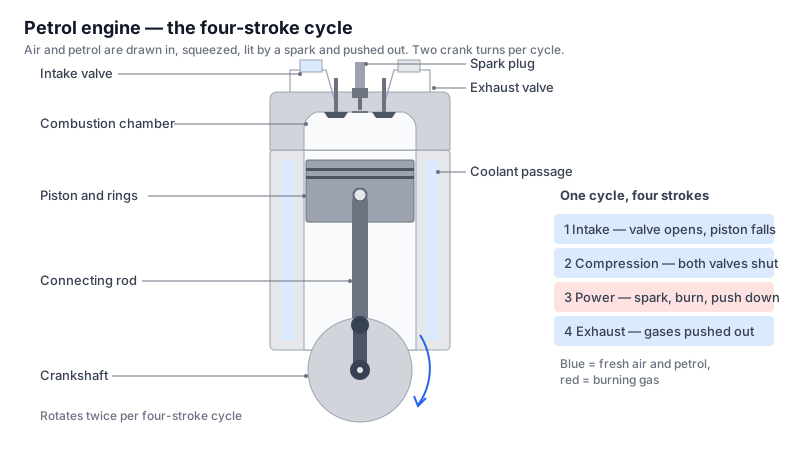
Petrol engine
A spark-ignition engine that burns a petrol-air mixture inside cylinders to push pistons and turn a crankshaft.
275 vehicles
What is actually under the body panels? Every spec sheet throws terms at you: AMT, turbo, MacPherson strut, monoshock, ladder frame. This section explains each component type in plain English, with a diagram and a short list of what it does well and where it falls short, and lists every model in the catalog that uses it.
How the vehicle makes its power: engines, motors, batteries and the parts that feed and cool them.
A spark-ignition engine that burns a petrol-air mixture inside cylinders to push pistons and turn a crankshaft.
275 vehicles
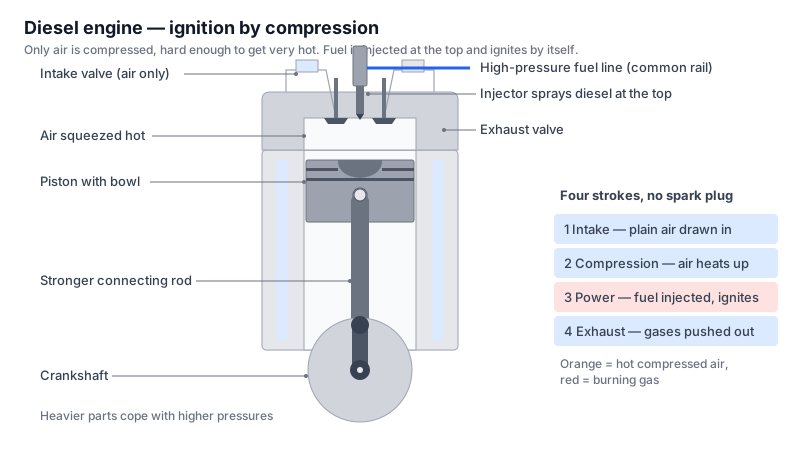
A compression-ignition engine that squeezes air until it is hot enough to ignite injected diesel; strong at low revs and frugal.
120 vehicles
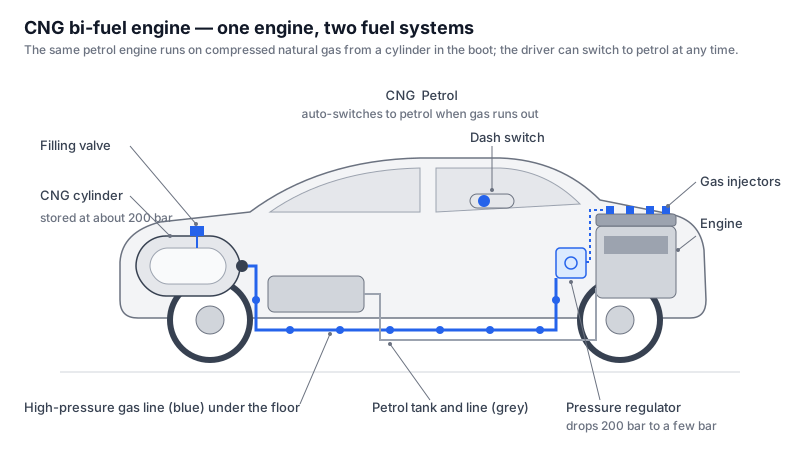
A petrol engine fitted with a second fuel system so it can run on compressed natural gas, switching back to petrol when needed.
40 vehicles
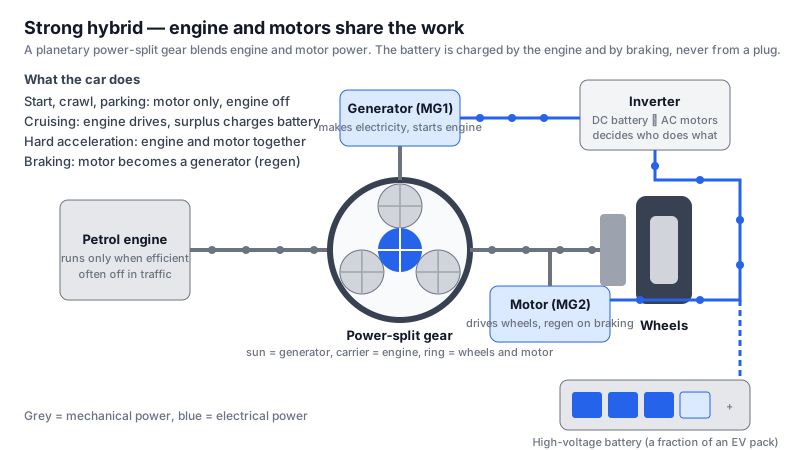
A petrol engine, two motor-generators and a small battery share the driving, so the engine shuts off and the car runs electrically in traffic.
14 vehicles
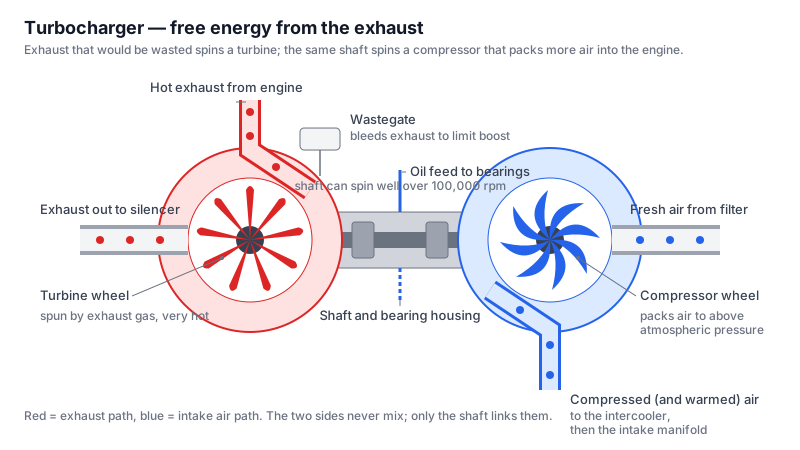
An exhaust-driven turbine spins a compressor that packs more air into the engine, so a small engine makes the power of a larger one.
30 vehicles
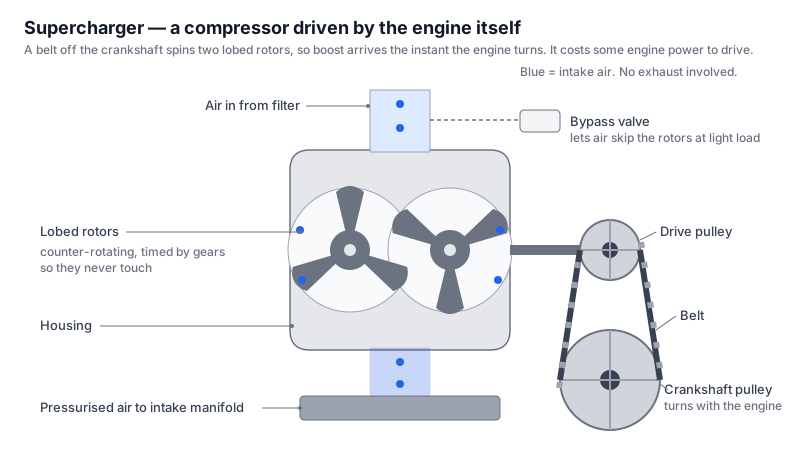
A compressor driven directly by the engine through a belt, giving instant boost from idle at the cost of some engine power.
No vehicles mapped yet
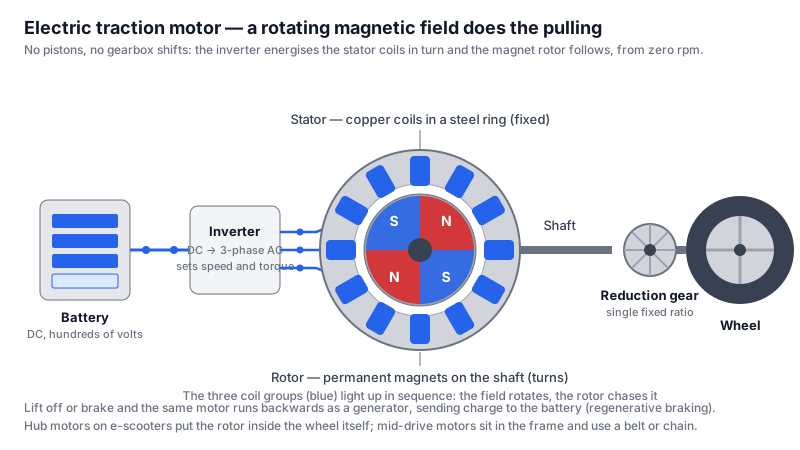
The motor that drives an EV's wheels: a rotating magnetic field in the stator drags the rotor round, with full torque from standstill.
83 vehicles
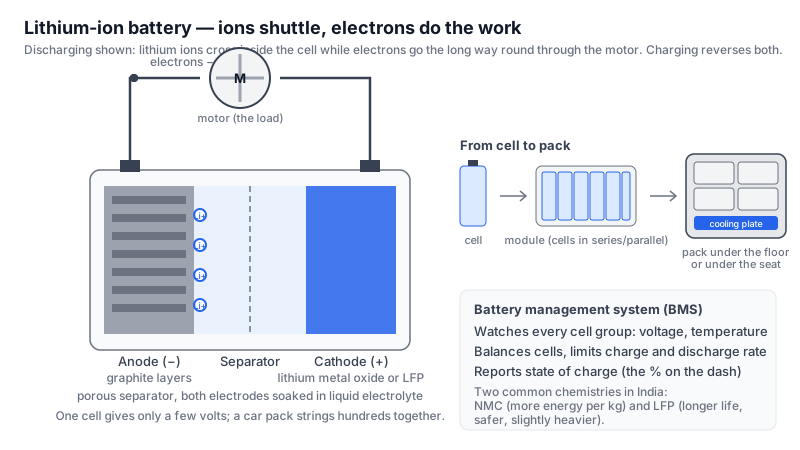
The EV's fuel tank: hundreds of lithium-ion cells grouped into a pack, with a management system that watches voltage and temperature.
85 vehicles
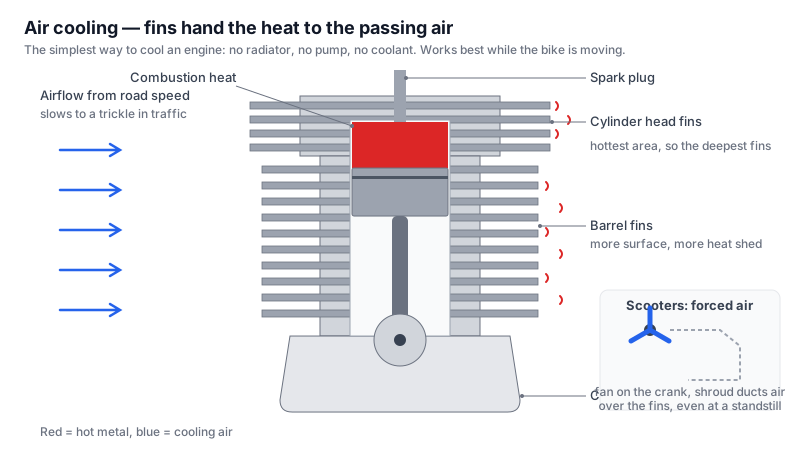
Cooling fins on the cylinder and head pass engine heat straight to the air flowing past; simple, light and cheap.
40 vehicles
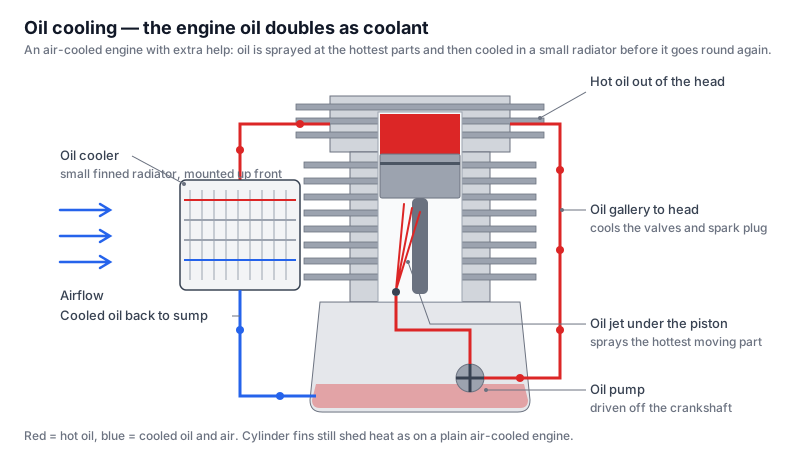
An air-cooled engine that also pumps its oil through a small radiator, so the oil can carry heat away from the hottest parts.
16 vehicles
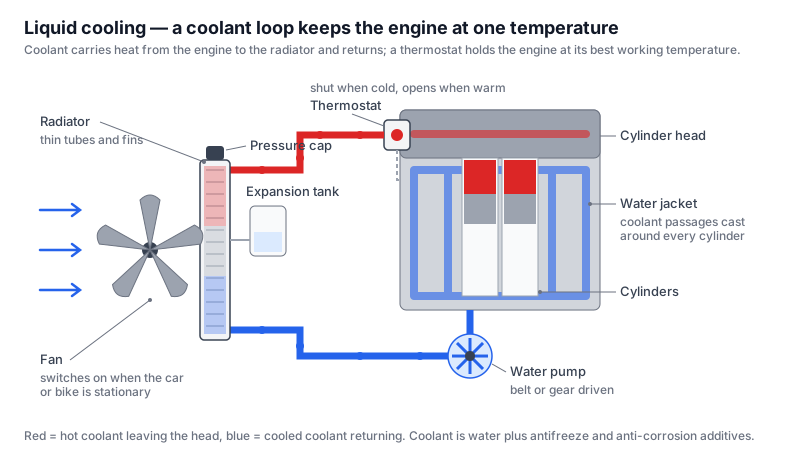
Coolant pumped through jackets around the cylinders carries heat to a radiator, holding the engine at a steady temperature whatever the traffic.
70 vehicles
How that power is geared down and handed to the wheels.
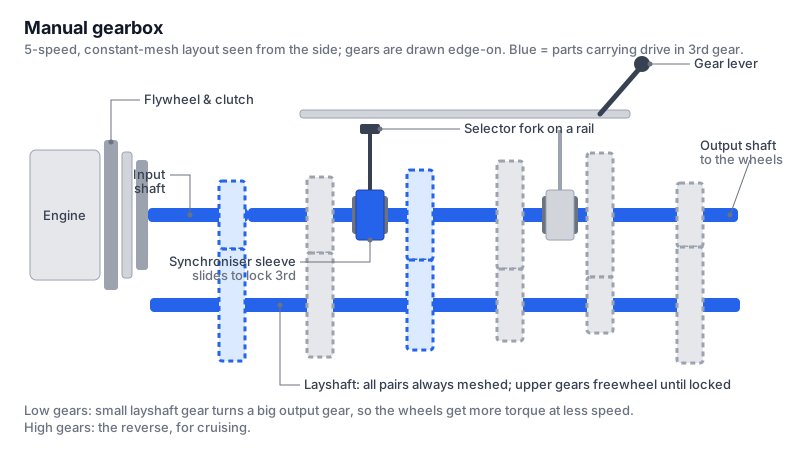
A gearbox where the driver selects each ratio with a lever and a clutch pedal, the default on most Indian cars and trucks.
73 vehicles
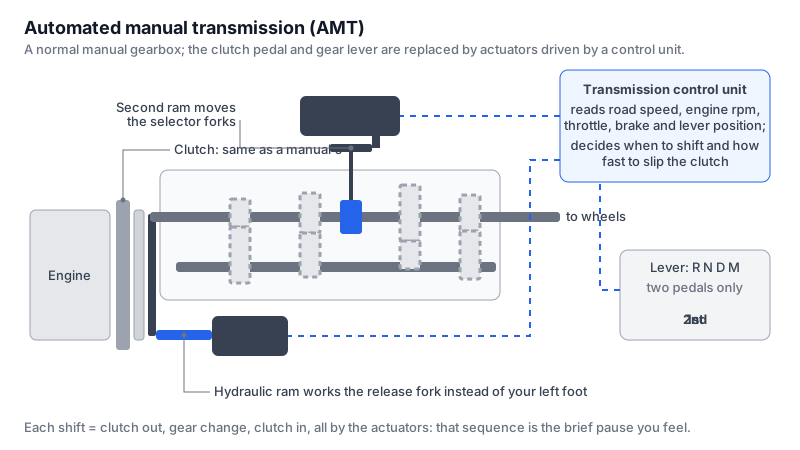
A normal manual gearbox fitted with actuators that work the clutch and shift the gears, giving two-pedal driving at low cost.
1 vehicle
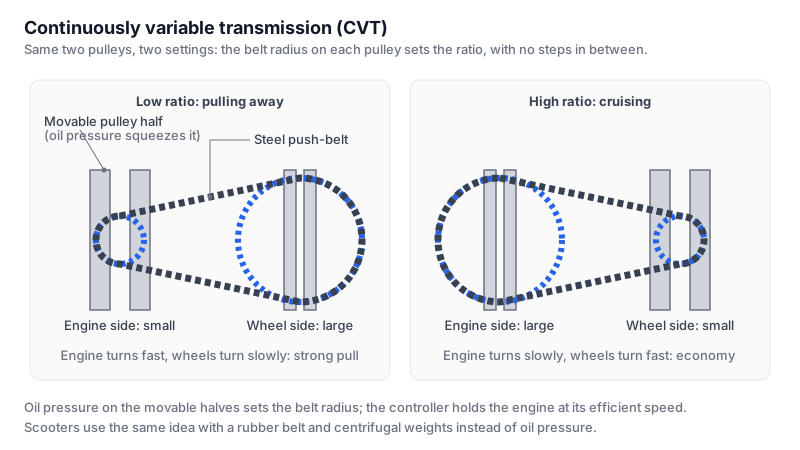
A belt-and-pulley transmission that changes its ratio smoothly and continuously, so the engine can stay at its most efficient speed.
11 vehicles
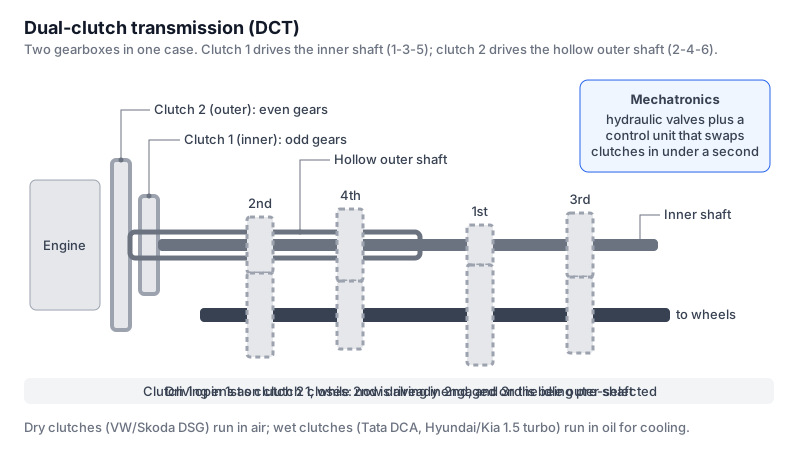
An automated gearbox with two clutches on two input shafts, so the next gear is pre-selected and shifts happen almost instantly.
Which wheels are driven, and what connects them to the gearbox.
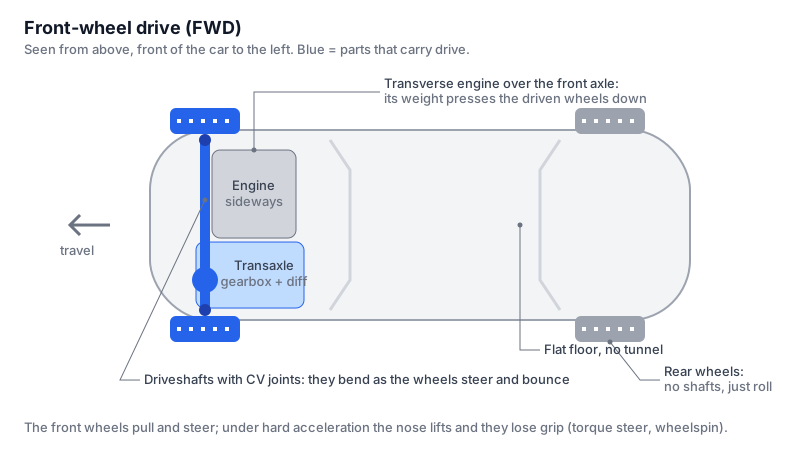
The engine drives the front wheels, with engine, gearbox and differential packed together over the front axle; the layout of most Indian cars.
3 vehicles
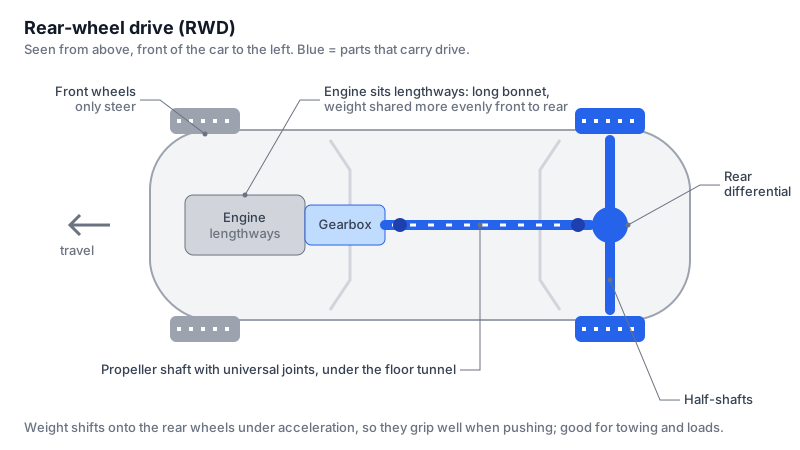
The engine drives the rear wheels through a propeller shaft and rear differential, leaving the front wheels to steer; typical of SUVs and trucks.
4 vehicles
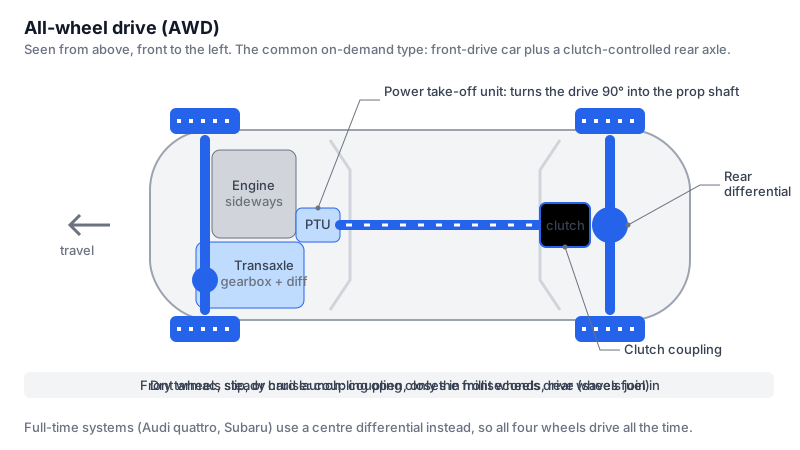
A system that can drive all four wheels automatically, usually adding a clutch-controlled rear axle to a front-wheel-drive car for extra grip.
6 vehicles
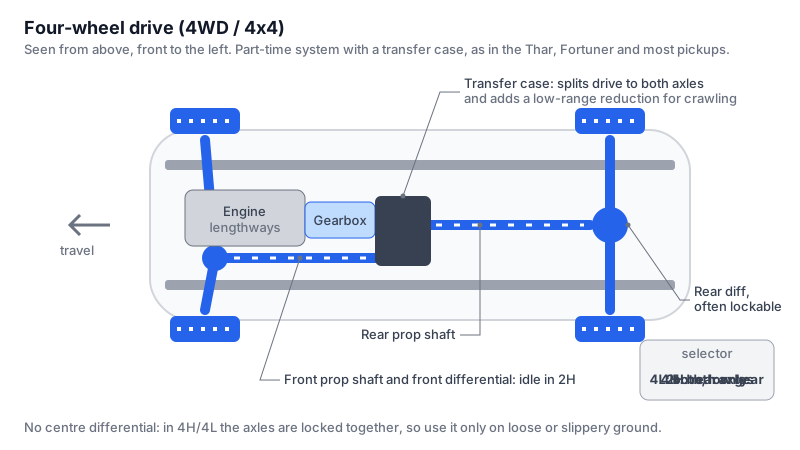
Selectable 4x4 with a transfer case and low-range gears, locking both axles together for off-road use; standard on the Thar, Fortuner 4x4 and pickups.
How the wheels follow the road while the body stays settled.
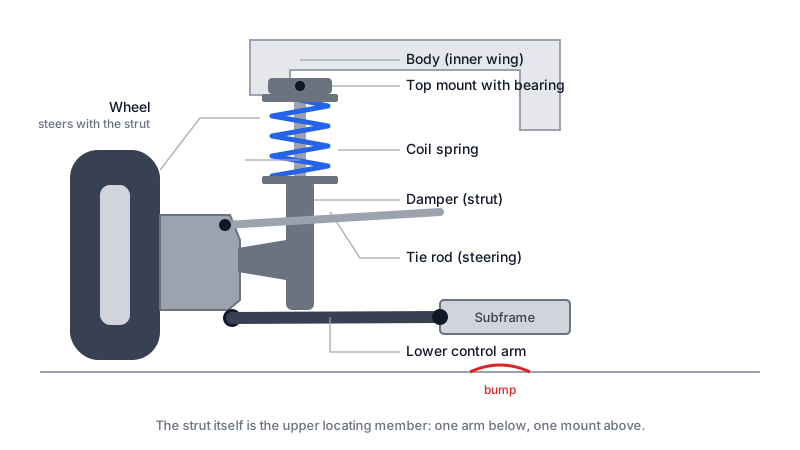
A single strut combining the coil spring and damper doubles as the upper locating member of the front wheel.
27 vehicles
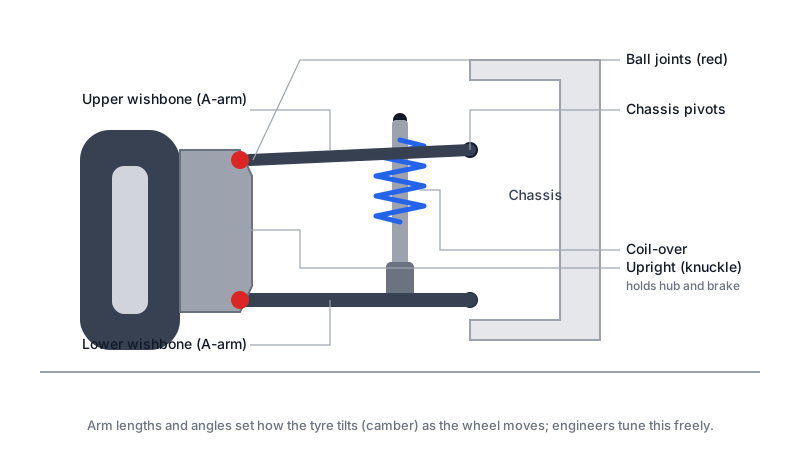
Two A-shaped arms, one above the other, hold the wheel so its angle to the road can be tuned precisely.
7 vehicles
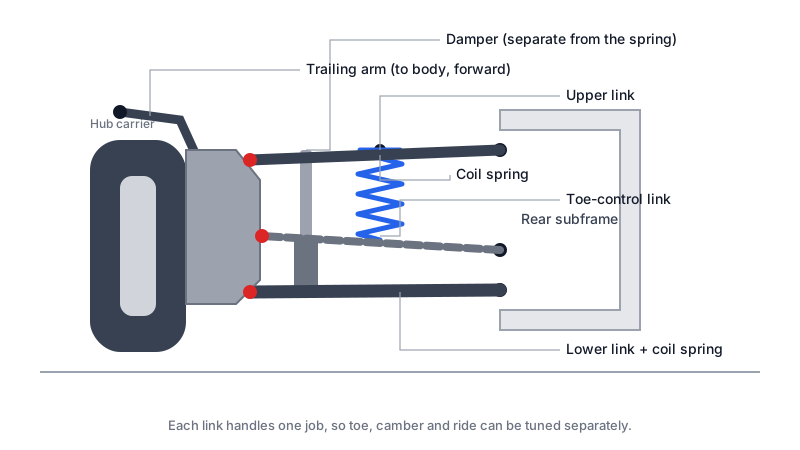
Four or five separate links each control one direction of wheel movement, giving the best ride and handling compromise.
10 vehicles
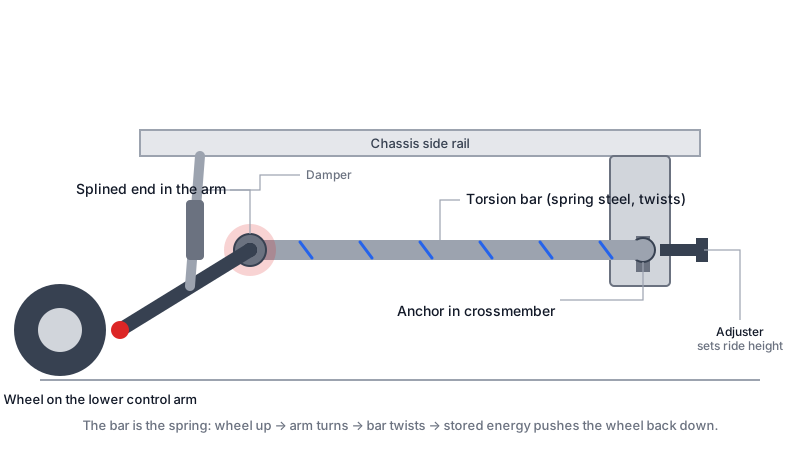
A long steel bar twisted by the control arm acts as the spring, saving the space a coil spring would need.
No vehicles mapped yet
How it slows down and stops, and what keeps the wheels from locking.
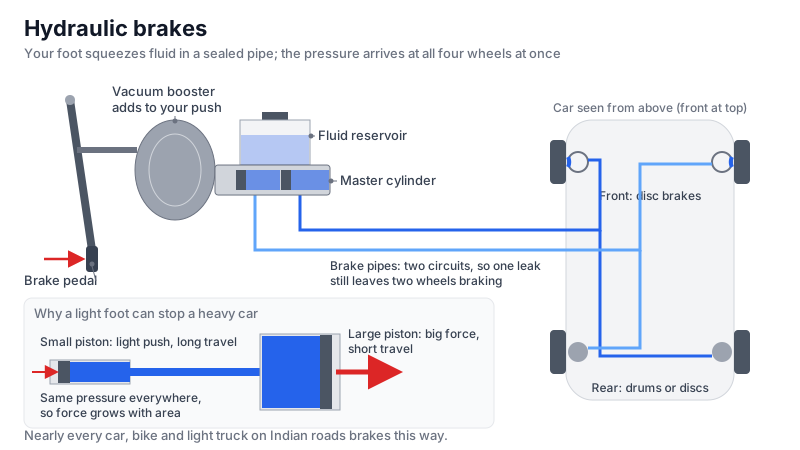
Your foot pressurises brake fluid in sealed pipes, and that pressure pushes the pads or shoes at every wheel at the same time.
6 vehicles
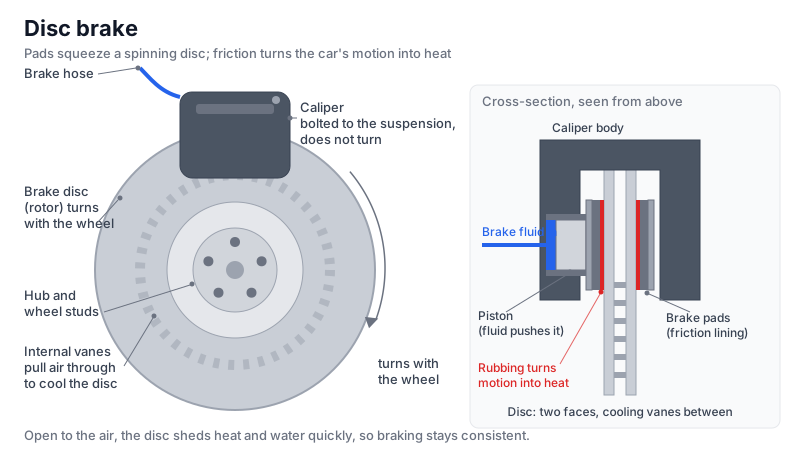
A caliper squeezes friction pads against a cast-iron disc that spins with the wheel, turning speed into heat that the open disc sheds quickly.
174 vehicles
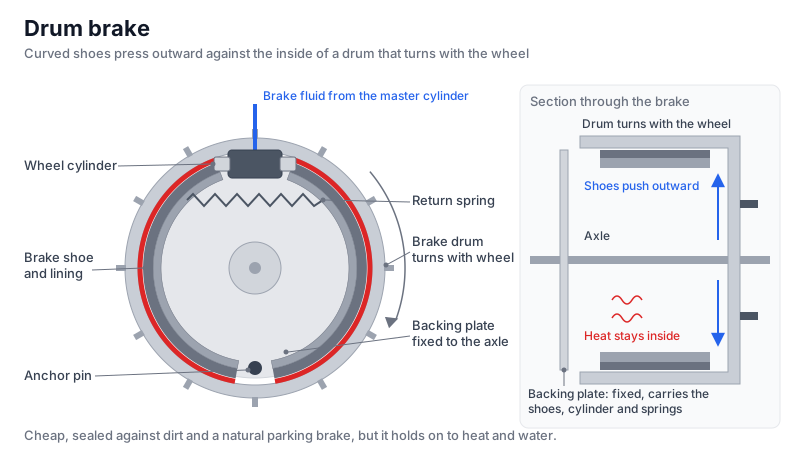
Two curved shoes inside a drum that turns with the wheel are pushed outward against its inner surface to slow it down.
60 vehicles
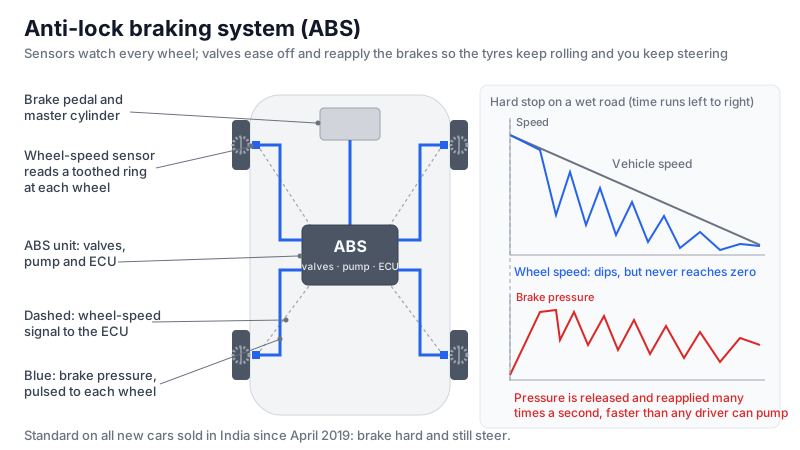
Sensors watch each wheel and valves ease off the brake the instant one is about to lock, so you can keep steering while braking hard.
146 vehicles
What the whole vehicle is built around.
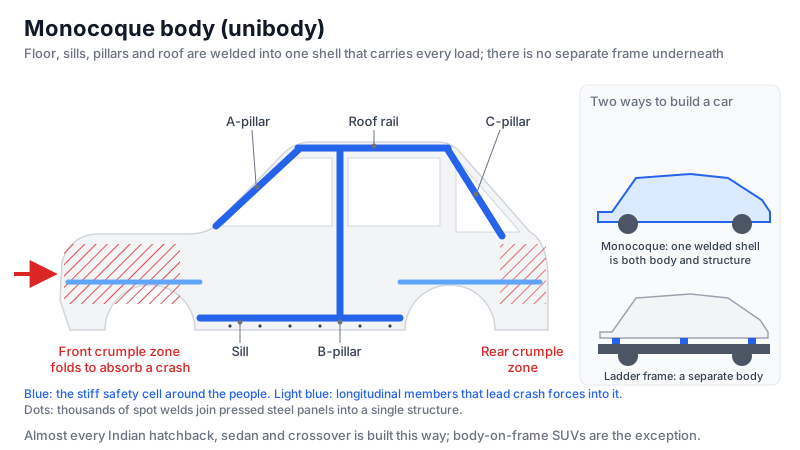
The body shell itself is the structure: floor, sills, pillars and roof are welded into one unit that carries the engine, suspension and passengers.
7 vehicles
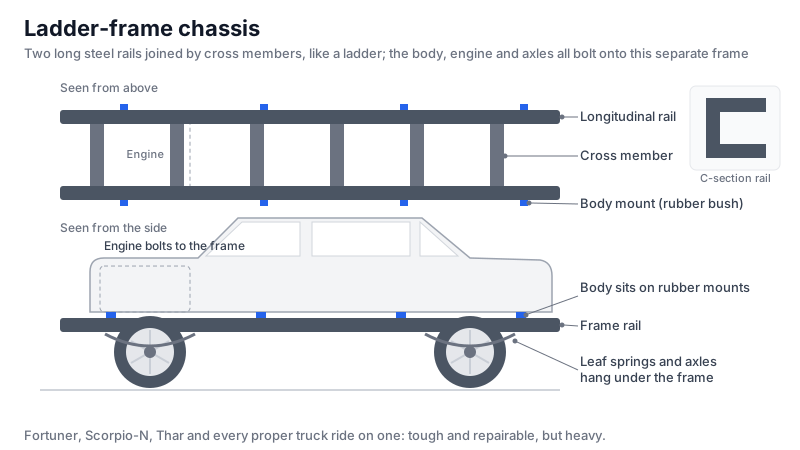
Two long steel rails joined by cross members form a separate frame; the body, engine and axles all bolt onto it.
6 vehicles
14 vehicles
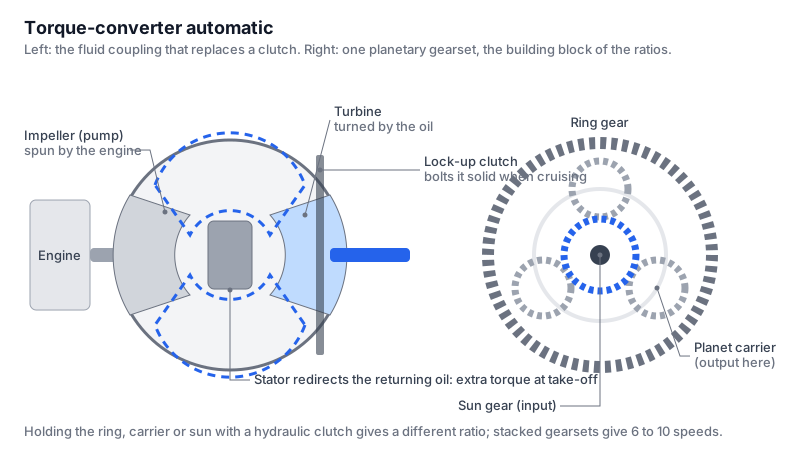
The classic automatic: a fluid torque converter instead of a clutch, with planetary gearsets selected by hydraulic clutches.
25 vehicles
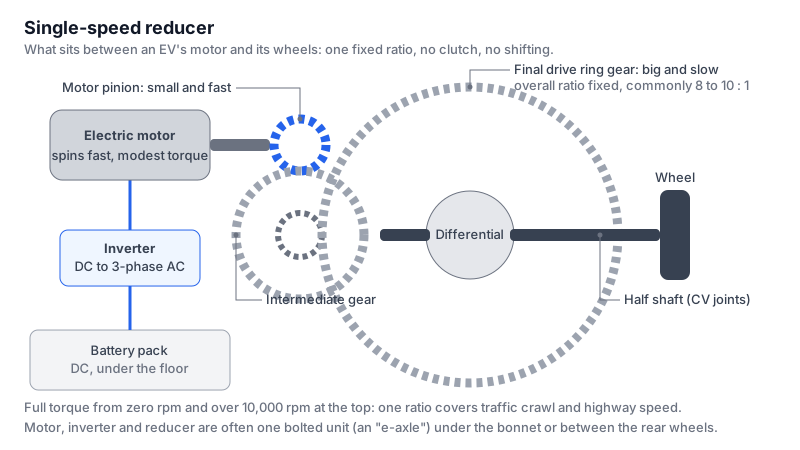
The fixed-ratio gear set that connects an electric motor to the wheels: no clutch, no shifting, just a reduction and a differential.
30 vehicles
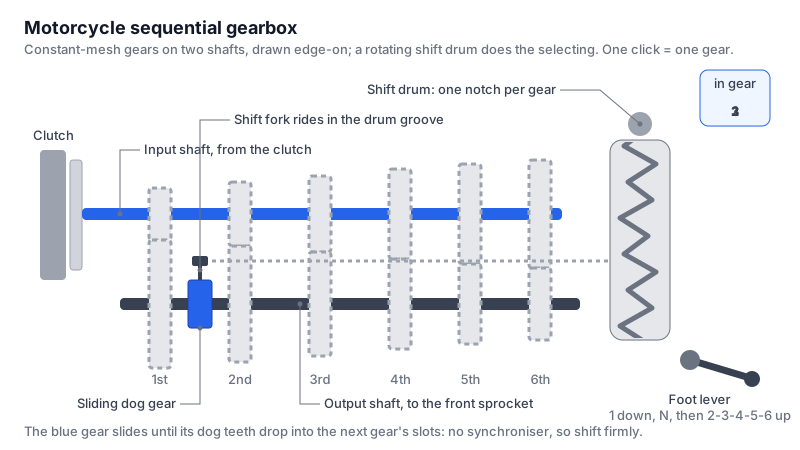
The foot-operated motorcycle gearbox: one click of the lever per gear, selected by a rotating drum rather than a lever in a gate.
158 vehicles
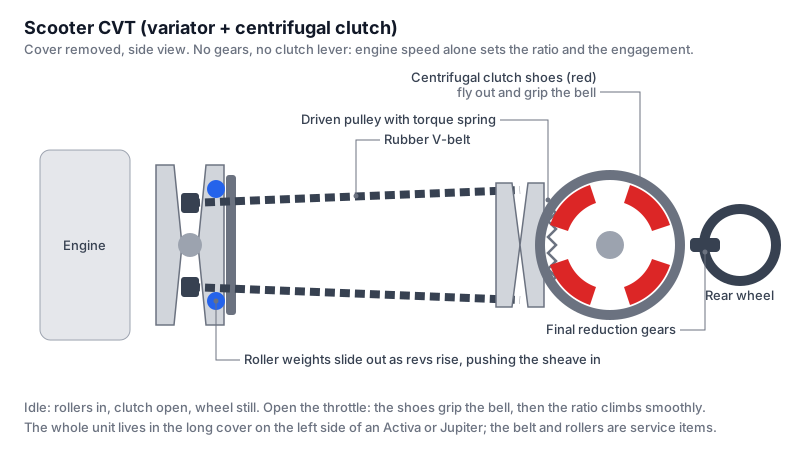
The twist-and-go automatic on petrol scooters: a rubber belt between two variable pulleys and a centrifugal clutch, with no gears to change.
26 vehicles
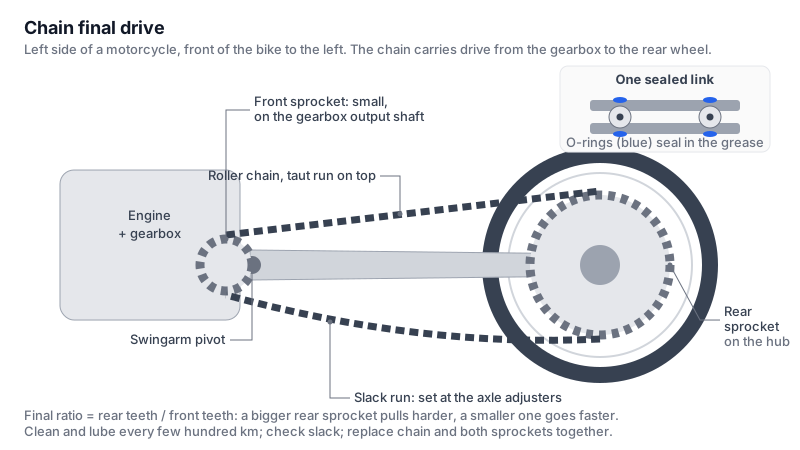
A roller chain between a small gearbox sprocket and a large rear-wheel sprocket, the final drive on almost every motorcycle in India.
21 vehicles
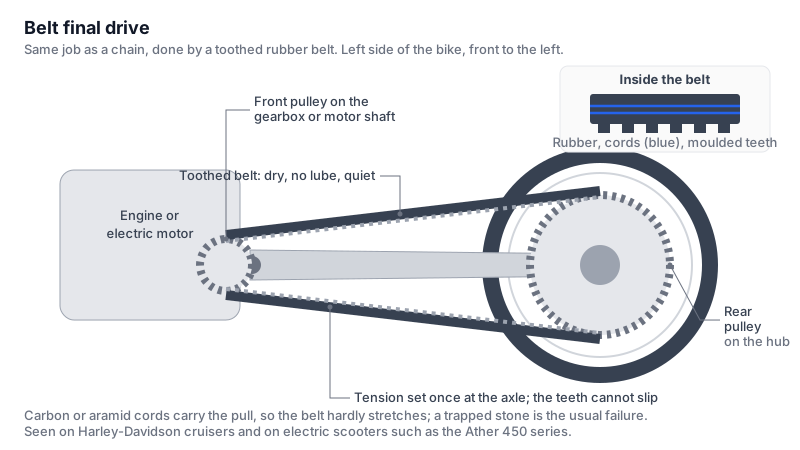
A toothed rubber belt with tensile cords in place of a chain: quiet and maintenance-free, used on cruisers and many electric scooters.
No vehicles mapped yet
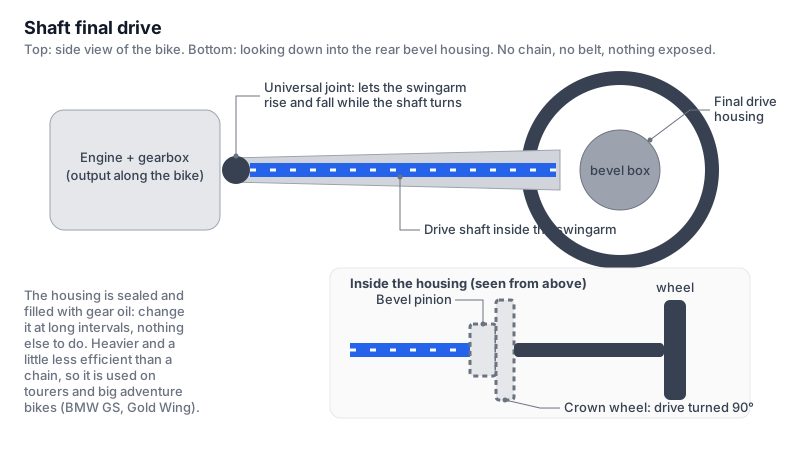
A sealed drive shaft inside the swingarm turning bevel gears at the rear hub: nothing to lube or adjust, used on tourers and adventure bikes.
No vehicles mapped yet
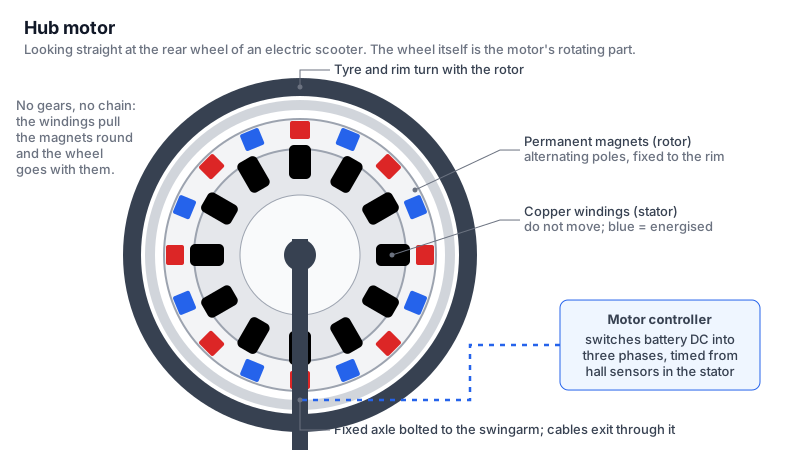
An electric motor built into the wheel itself: a fixed stator on the axle with the wheel rim rotating around it as the rotor.
2 vehicles
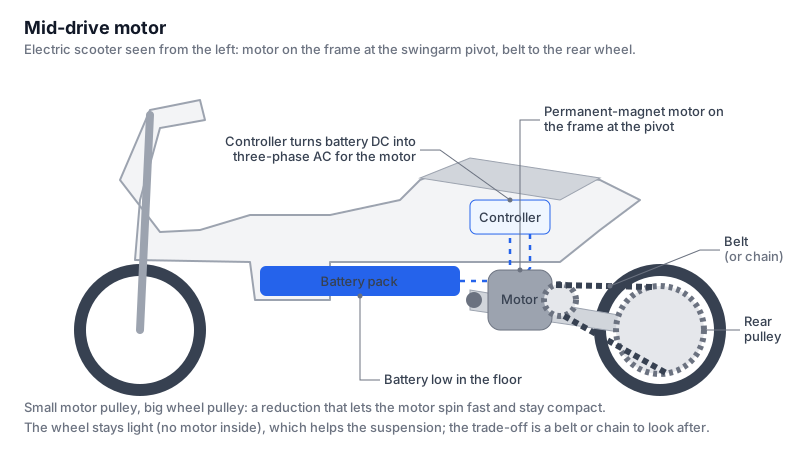
An electric motor on the frame or swingarm, driving the rear wheel through a belt or chain, so the motor can be small and fast.
5 vehicles
5 vehicles
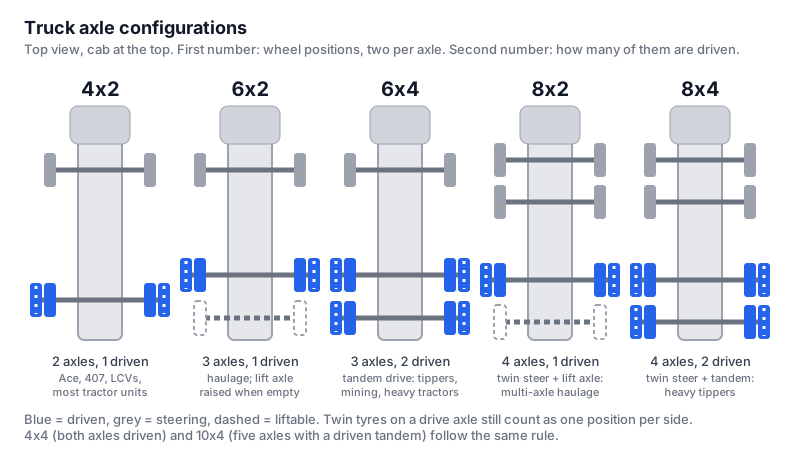
The 4x2, 6x2, 6x4, 8x2 or 8x4 code on a truck: total wheel positions by the number that are driven.
3 vehicles
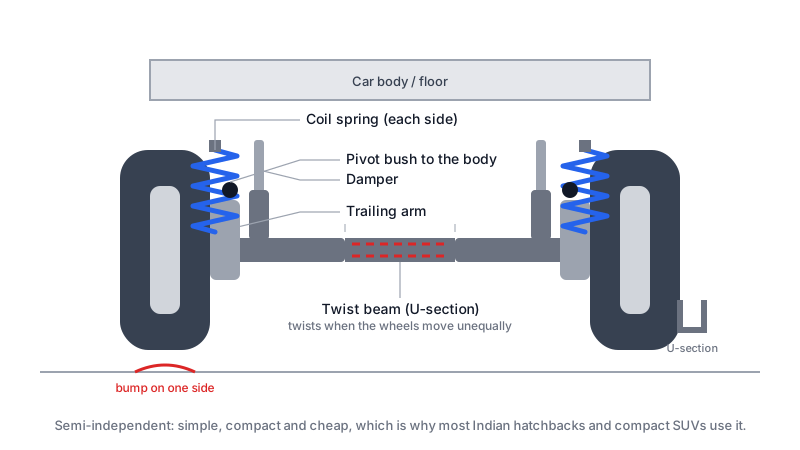
Two trailing arms joined by a twistable crossbeam give a cheap, compact rear suspension for front-wheel-drive cars.
21 vehicles
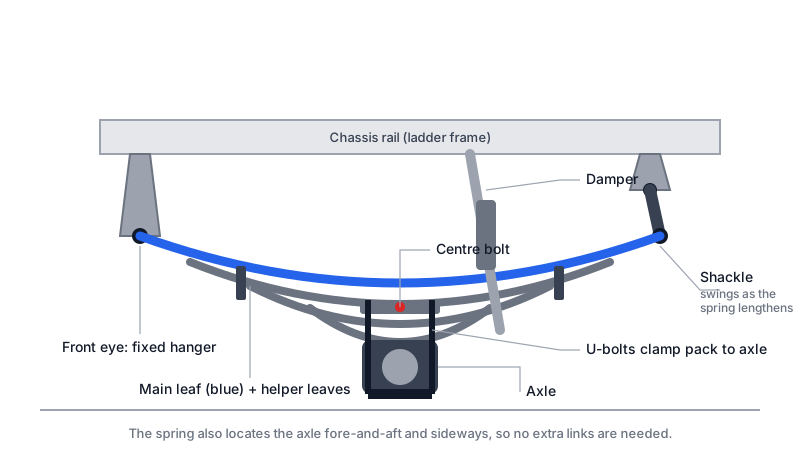
A stack of curved steel strips clamped to the axle springs the vehicle and locates the axle, with no extra links.
34 vehicles
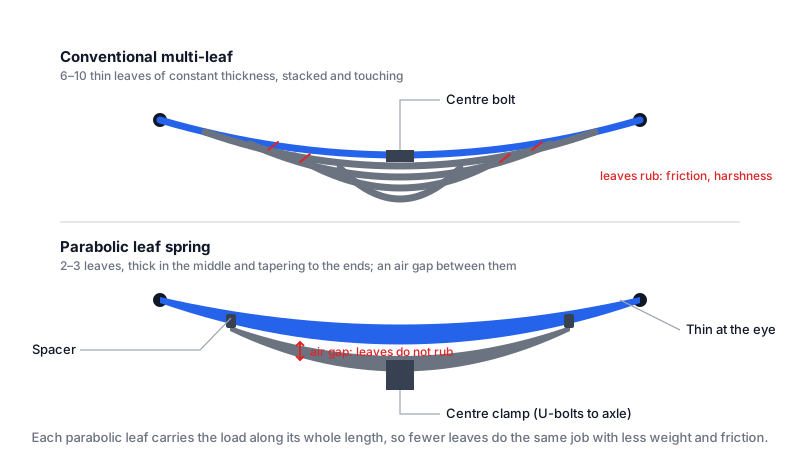
A leaf spring with two or three tapered leaves instead of many flat ones: lighter, smoother and less prone to friction.
24 vehicles
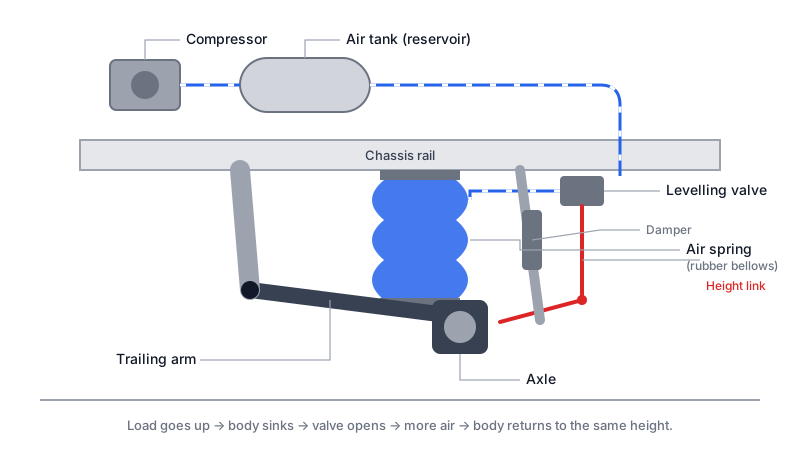
Rubber bellows filled with compressed air replace steel springs and keep ride height constant whatever the load.
1 vehicle
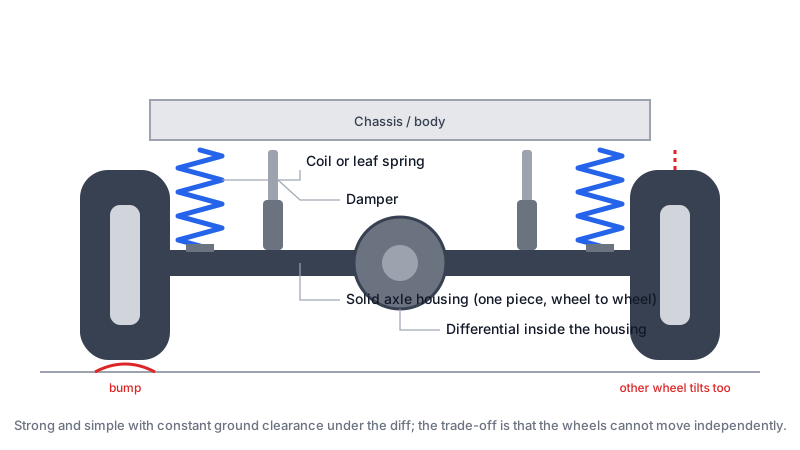
One solid axle housing joins both wheels, so they move together: simple, strong and great for towing and off-road.
2 vehicles
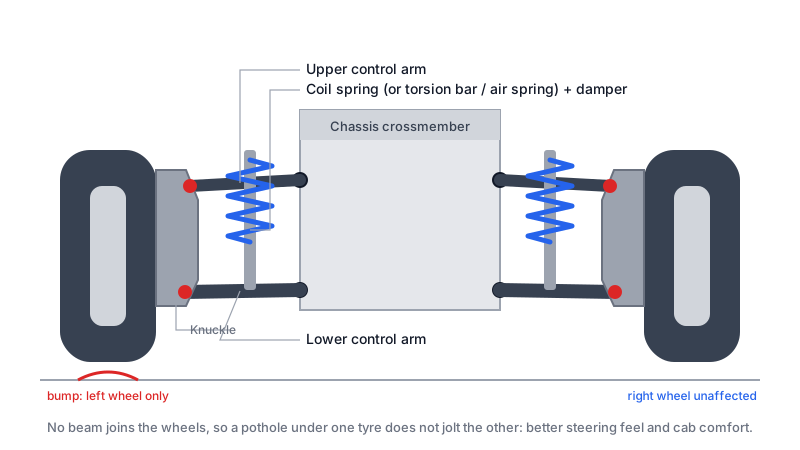
Each front wheel of a truck or pickup moves on its own arms, sparing the driver the jolts a beam axle passes across.
3 vehicles
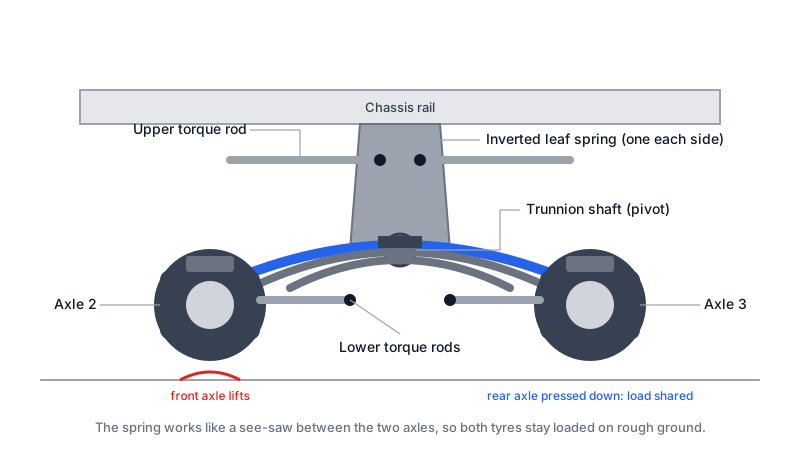
A trunnion-mounted inverted leaf spring rocks between two rear axles so both share the load on rough ground.
4 vehicles
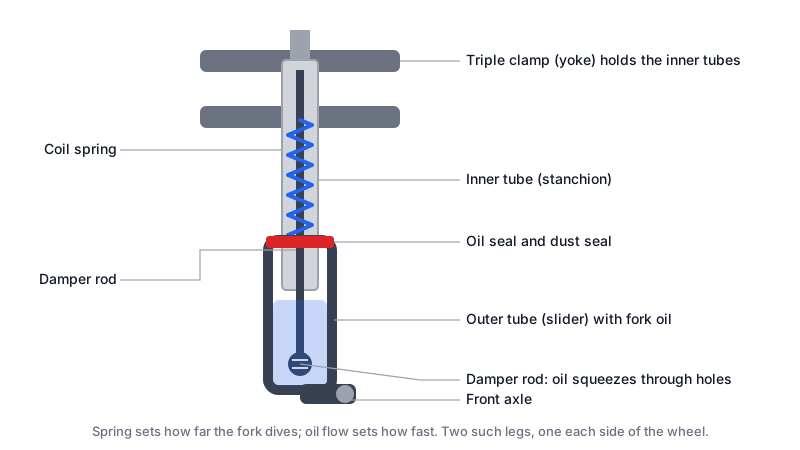
Two sliding tubes on each side of the front wheel contain a spring and oil damper: the standard motorcycle front suspension.
89 vehicles
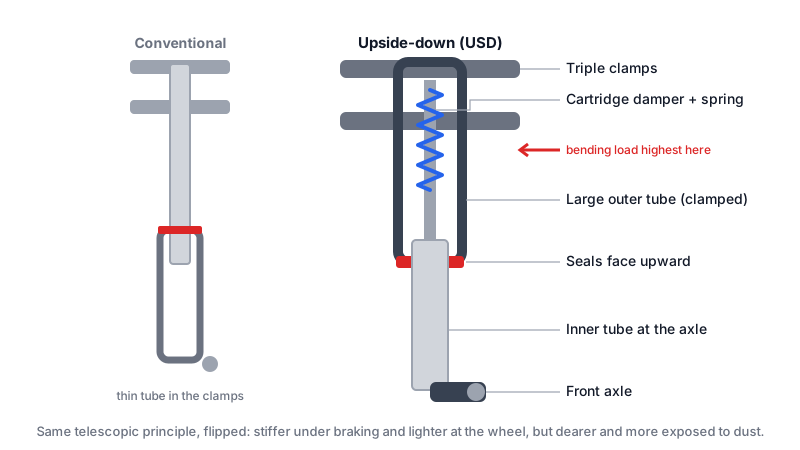
A telescopic fork turned over so the fat tube is clamped at the top: stiffer under braking and lighter at the wheel.
49 vehicles
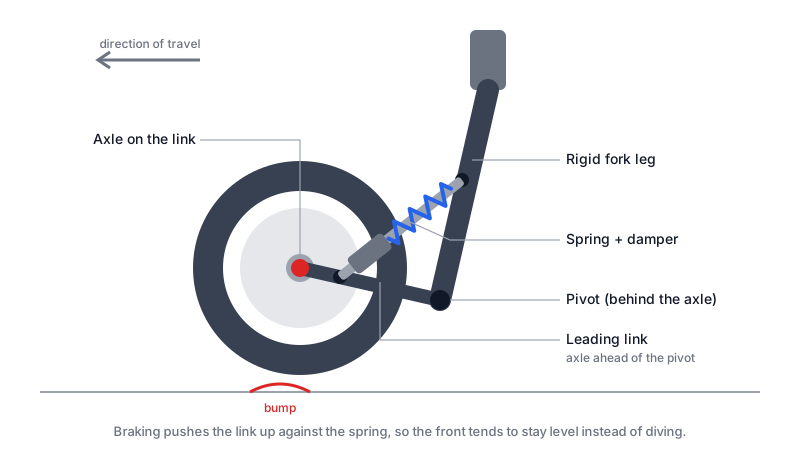
A rigid fork with a short link ahead of its pivot carrying the axle, which resists nose-dive under braking.
No vehicles mapped yet
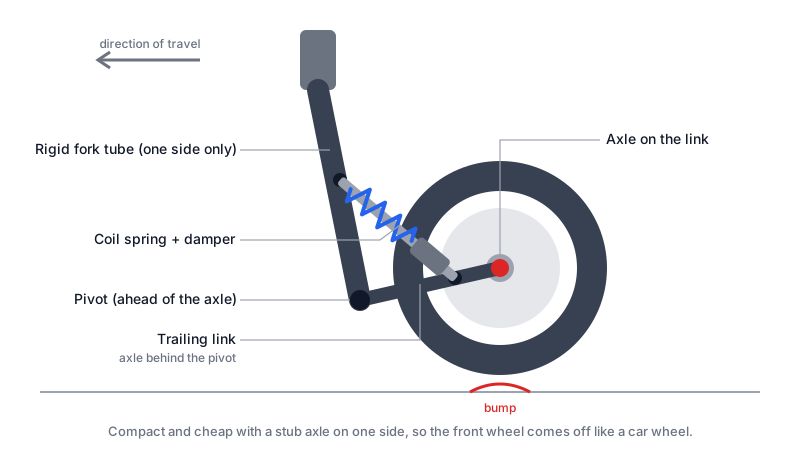
The classic scooter front end: a short link behind its pivot carries the wheel on one side, sprung by a coil over a damper.
No vehicles mapped yet
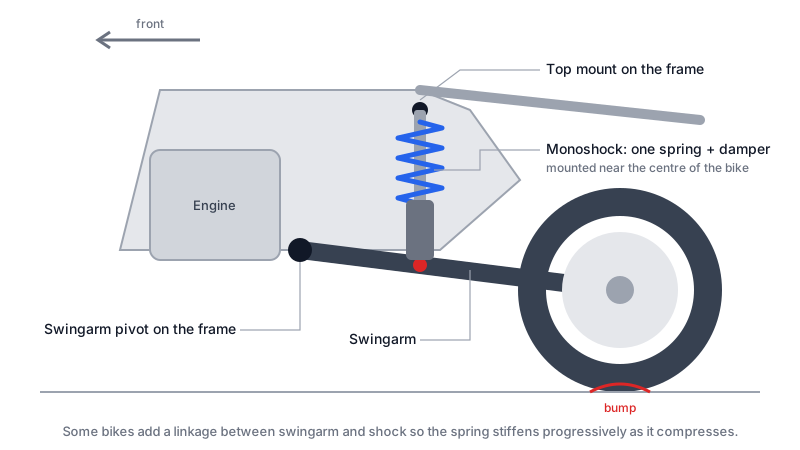
One central spring and damper unit between the swingarm and frame, often through a linkage, controls the rear wheel.
83 vehicles
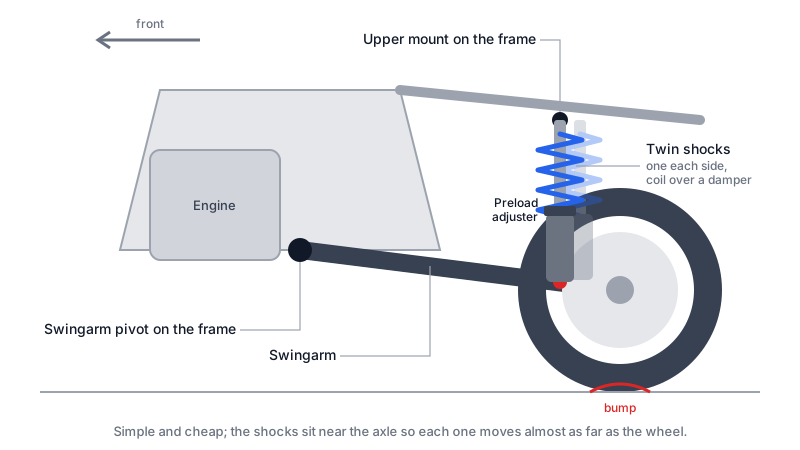
A coil-over damper on each side of the rear wheel, from swingarm to frame: the simplest motorcycle rear suspension.
32 vehicles
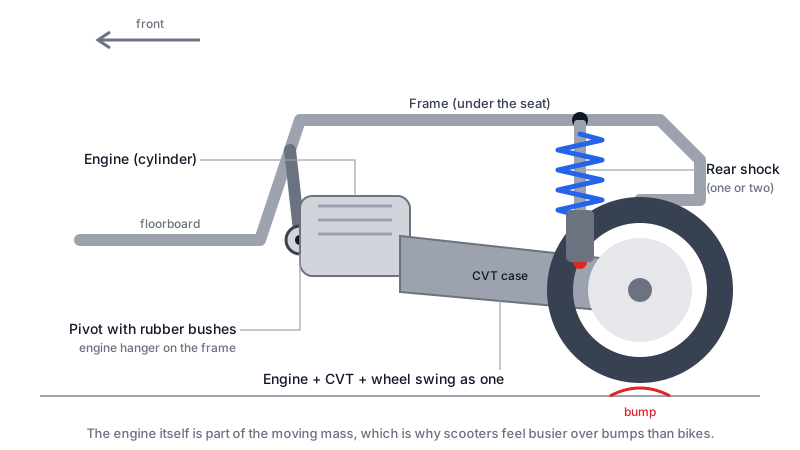
On a scooter the engine, transmission and rear wheel form one unit that swings on a pivot, sprung by a rear shock.
5 vehicles
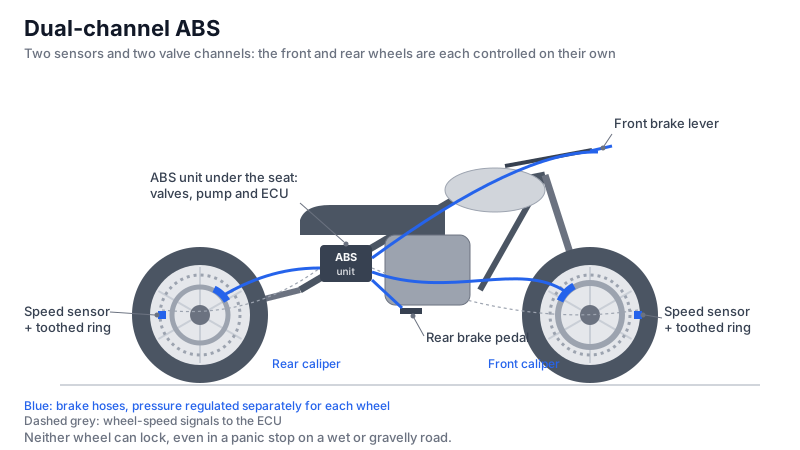
Motorcycle ABS with a speed sensor and control valve for both wheels, so neither the front nor the rear can lock under hard braking.
88 vehicles
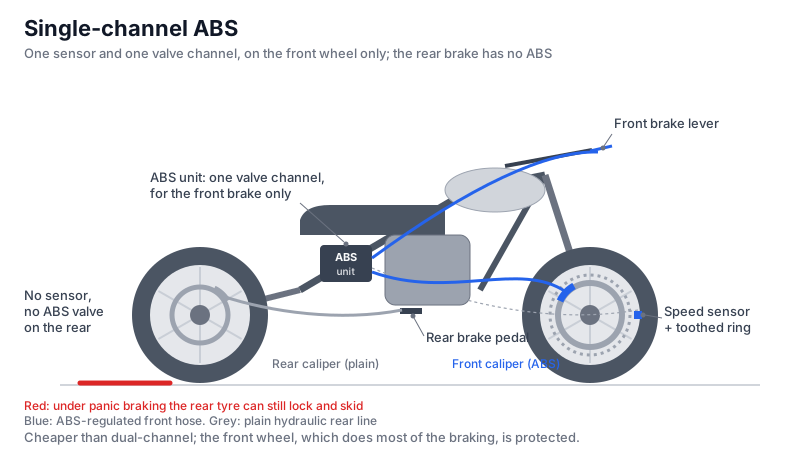
Budget motorcycle ABS that regulates only the front brake; the rear brake works like a normal brake and can still lock.
21 vehicles
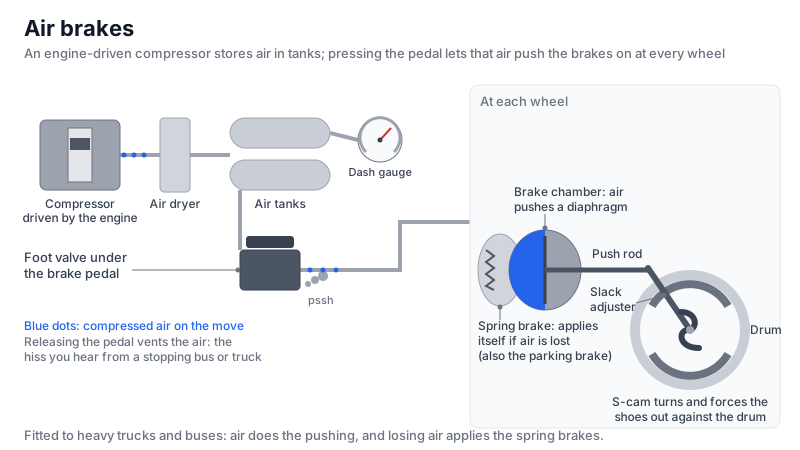
Heavy trucks and buses brake with compressed air: a compressor fills tanks, and the pedal meters that air to chambers that push the brakes on.
22 vehicles
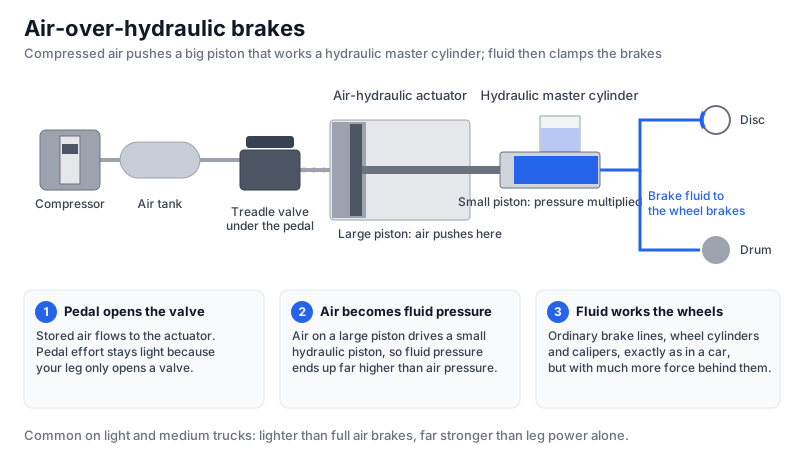
A halfway house for lighter trucks: compressed air works a hydraulic master cylinder, so fluid does the braking with air doing the pushing.
No vehicles mapped yet