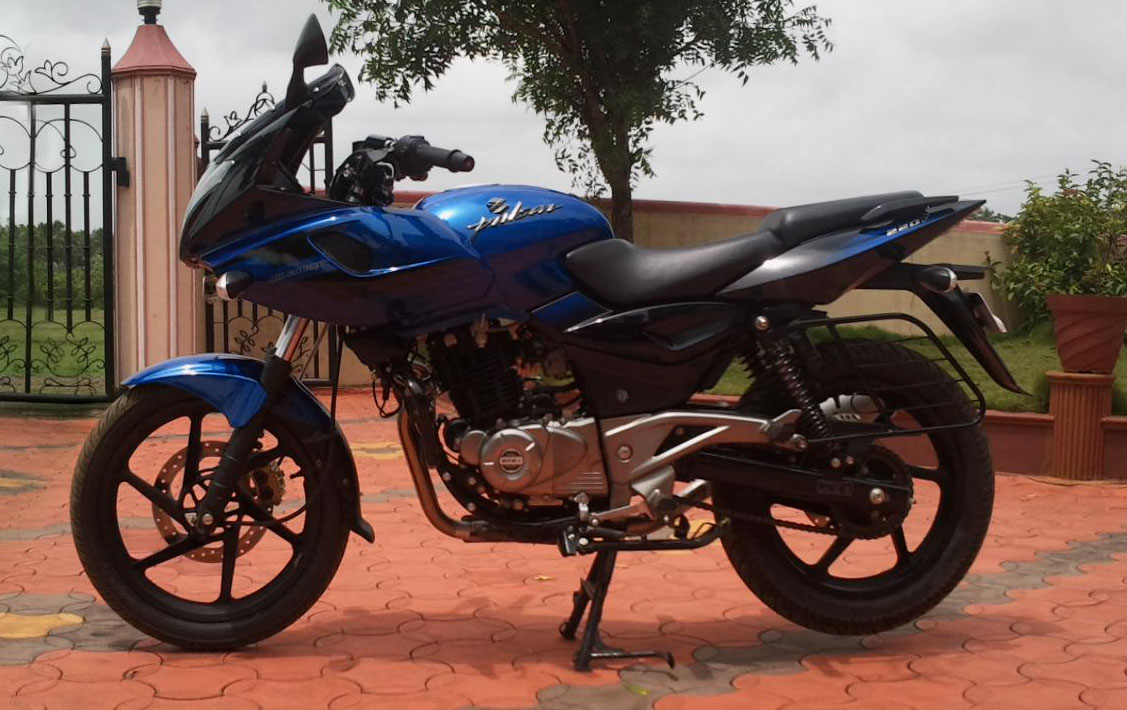
Telescopic fork
SuspensionTwo sliding tubes on each side of the front wheel contain a spring and oil damper: the standard motorcycle front suspension.
Found on: Motorcycles · Scooters
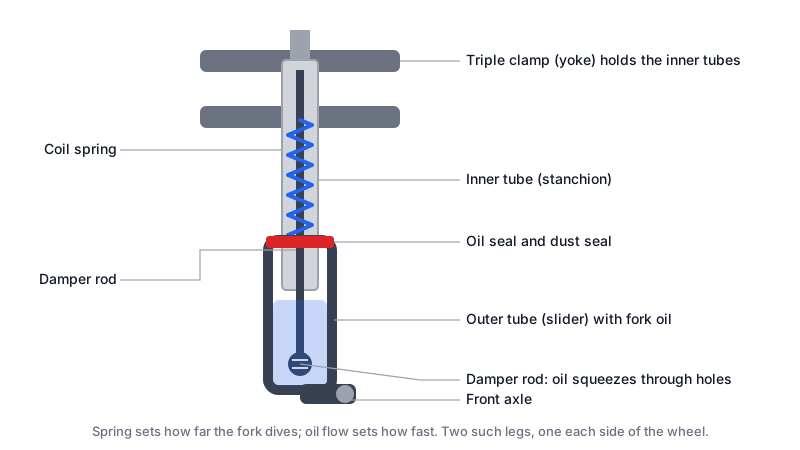
Cutaway of one fork leg: the outer tube slides up the clamped inner tube, compressing the spring while oil is forced through the damper rod. 
Telescopic fork on a 1946 Triumph Tiger 100, one of the first production motorcycles to use the layout that is now universal.Photo: Yesterdays Antique Motorcycles · CC BY-SA 4.0 · Commons Telescopic fork versus upside-down fork, explained for Indian riders.Video: PowerDrift
How it works
The telescopic fork is the front suspension of nearly every motorcycle and most scooters sold in India, from the Hero Splendor and Honda Shine to the Royal Enfield Classic 350 and the Honda Activa. Each of the two fork legs is a pair of tubes: the thin inner tube, or stanchion, is clamped in the triple clamps under the handlebar, and the thick outer tube, or slider, carries the front axle. Inside each leg is a coil spring, a quantity of oil and a damper rod with small holes.
- The front tyre hits a bump and the outer tube slides up along the inner tube.
- The coil spring inside compresses, storing the energy.
- Oil is forced through the holes in the damper rod; the resistance slows the movement and turns the energy into heat.
- The spring extends again and oil flows back through a different set of holes, usually slower, so the front does not spring up too fast.
- An oil seal at the top of the outer tube keeps the oil in and a dust seal above it keeps grit out.
The rider notices the fork dive under braking, which shifts weight onto the front tyre and is part of how a bike steers. Spring stiffness decides how far it dives; oil viscosity and the damper holes decide how fast. Bigger stanchions resist flexing better, which is why sportier bikes quote fork diameters. The tubes must slide freely, so a bent stanchion, a pitted chrome surface or a leaking seal ruins the action and is the most common fork repair.
Pros
- Simple, cheap and light
- Doubles as the steering structure, so no extra linkage
- Easy to service: seals and oil are standard parts
Cons
- Dives under braking, steepening the steering
- Sliding bushes bring friction and stiction over small bumps
- Thin stanchions flex under hard braking on heavier bikes
Vehicles with this component
89 models on sale or coming. The note after the price is what the spec sheet says about this component; a variant name in brackets means only that trim brings it.
Motorcycles 70
 Bajaj Auto Avenger Cruise 220₹1.34 lakh · frontPhoto: Anderson Whale · CC BY-SA 4.0 · Wikimedia CommonsLaunched 1 Mar 2020launched
- Bajaj Auto Avenger Street 220₹1.34 lakh · frontLaunched 1 Mar 2020launched
Related: other suspension components
- MacPherson strut
- Double wishbone
- Multi-link suspension
- Torsion bar suspension
- Torsion beam axle
- Leaf spring suspension
- Parabolic leaf spring
- Air suspension
- Rigid axle (live axle)
- Independent front suspension (trucks)
- Bogie (tandem axle) suspension
- Upside-down (USD) fork
- Leading-link fork
- Trailing-link fork
- Monoshock
- Twin shock absorbers
- Unit-swing suspension