Disc brake
BrakesA caliper squeezes friction pads against a cast-iron disc that spins with the wheel, turning speed into heat that the open disc sheds quickly.
Found on: Cars · Motorcycles · Scooters · Trucks
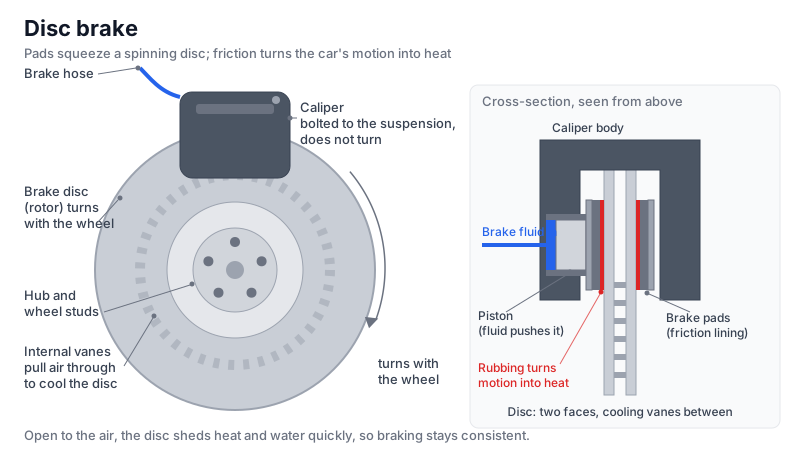
Disc, hub and caliper from the side; the cross-section shows the piston pushing the pads onto both faces of the disc 
Front disc brake with the wheel removed: disc, hub studs and the caliper straddling the edgePhoto: 4300streetcar · CC BY 4.0 · Commons How a motorcycle disc brake worksVideo: Sabin Civil Engineering
How it works
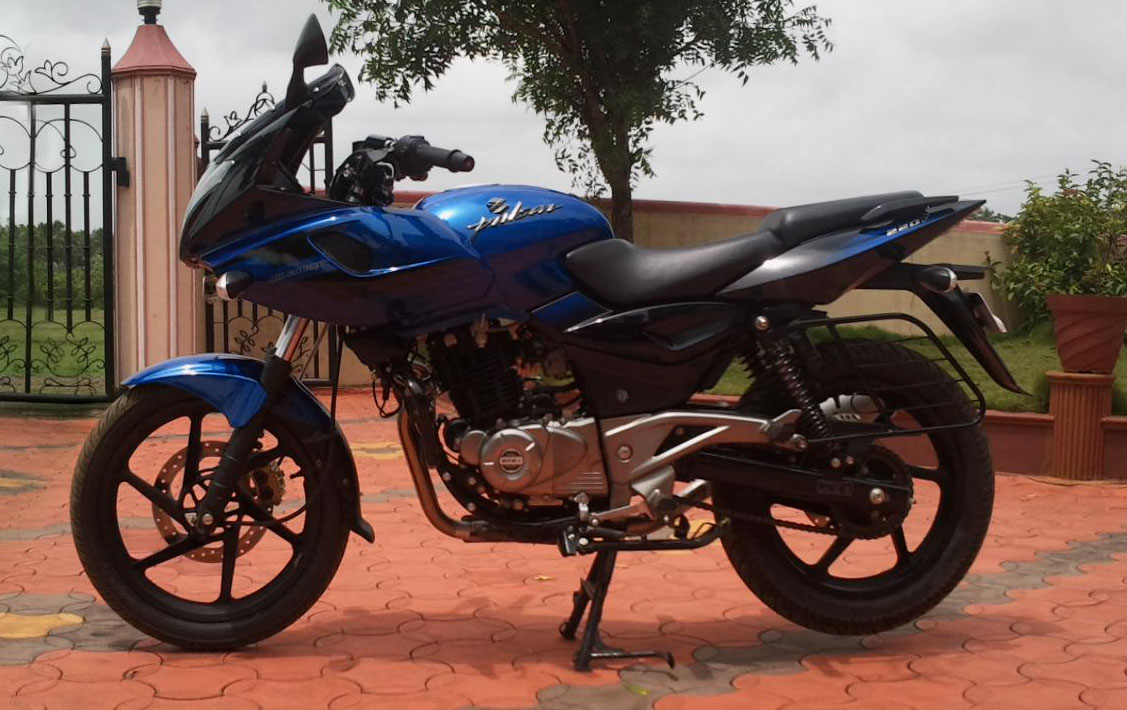
A disc brake is the brake you can see through the alloy wheels of most cars and on the front of nearly every modern motorcycle, from the Pulsar 150 upwards. A flat disc (rotor), cast iron on cars and trucks and usually stainless steel on bikes, is bolted to the hub and turns with the wheel. A caliper, bolted to the suspension so it cannot turn, straddles the edge of the disc with a friction pad on each side.
- Brake fluid pressure pushes a piston inside the caliper.
- The piston presses the inner pad against the disc; on a floating caliper the body slides and pulls the outer pad in too, so both faces are gripped evenly.
- Friction between pads and disc converts the vehicle's motion into heat.
- Air flowing over the disc, and through the vanes of a ventilated disc, carries the heat away.
- Release the pedal and the piston seal pulls the pad back a fraction of a millimetre, so the pads are always almost touching: there is nothing to adjust.
Because the disc is exposed, it cools fast and water is flung off within a turn, so braking stays consistent on a ghat road or in the monsoon. The pads wear visibly and are simple to replace. Many budget hatchbacks use discs only at the front, where most of the braking happens, with cheaper drums at the rear; performance cars, premium bikes and electric cars tend to have discs all round.
What you notice is a firm, predictable response and less fade on long descents. Discs can squeal when cold or glazed, and a warped disc gives a pulsing pedal.
Pros
- Sheds heat and water quickly, so it resists fade
- Self-adjusting; pad wear is easy to check
- Consistent, progressive feel
- Works well with ABS
Cons
- Costs more than a drum
- Exposed to road dirt and grit
- Needs a separate mechanism for the parking brake
- Pads and discs wear faster than drum linings
Vehicles with this component
174 models on sale or coming. The note after the price is what the spec sheet says about this component; a variant name in brackets means only that trim brings it.
Cars 44
 Honda Cars Amaze₹7.65 lakh · frontPhoto: Ashwin's Garage · CC BY 3.0 · Wikimedia CommonsLaunched 1 Dec 2024launched
 Honda Cars Amaze 2nd Gen₹6.98 lakh · frontPhoto: Sherwin · CC BY-SA 4.0 · Wikimedia Commons