CNG bi-fuel engine
EngineA petrol engine fitted with a second fuel system so it can run on compressed natural gas, switching back to petrol when needed.
Found on: Cars · Trucks
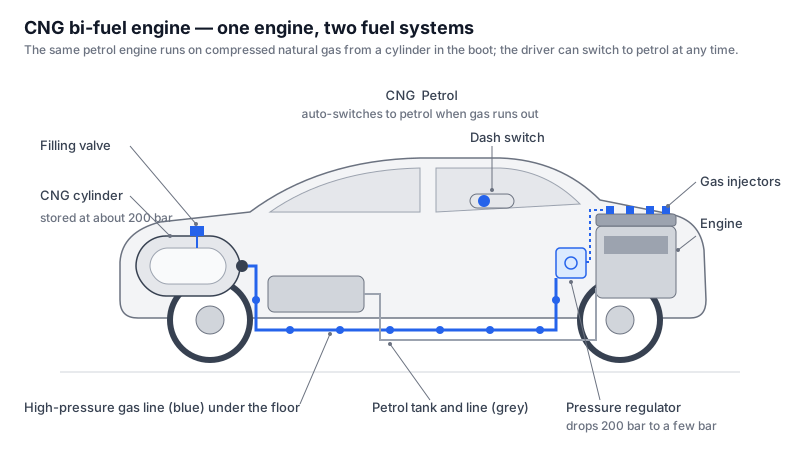
Where the parts sit in a hatchback: cylinder in the boot, high-pressure line under the floor, regulator and gas injectors at the engine, and the dash switch. Bosch technical animation of a CNG fuel system on a petrol engine.Video: Bosch Mobility
How it works
A bi-fuel CNG car is a petrol car with a complete second fuel system fitted at the factory. Compressed natural gas is stored in a steel cylinder, usually in the boot, at roughly 200 bar. A high-pressure line runs under the floor to a regulator in the engine bay, which drops the pressure to a few bar, and a separate set of gas injectors feeds the intake manifold. The engine itself is the same petrol engine with a few changes for the different fuel: hardened valves and seats, revised spark timing and an engine control unit that knows how to run on both.
- Starting: the engine usually fires on petrol and switches to CNG once running.
- Gas mode: the regulator meters gas to the gas injectors; the petrol injectors stay idle.
- Running out: when the cylinder is empty the system switches back to petrol on its own; the driver can also press the dash switch at any time.
- Filling: CNG goes in through its own valve, and a fill takes a little longer than petrol.
Natural gas is mostly methane, which burns cleanly and costs less per kilometre than petrol in cities with a pipeline network, which is why the WagonR, Ertiga and Tata Punch iCNG sell strongly around Delhi, Mumbai and Gujarat. The downsides are the cylinder itself: it takes much of the boot (twin-cylinder layouts and underfloor tanks reduce this), adds weight, and must be hydro-tested every three years. Power drops noticeably in gas mode, and CNG stations are still patchy outside the main corridors. Many buses, autorickshaws and small trucks such as the Tata Ace run dedicated CNG engines on the same principle, and Bajaj's Freedom 125 brought it to motorcycles.
Pros
- Lowest running cost per km where CNG is available
- Cleaner exhaust than petrol or diesel
- Petrol backup when no CNG pump is nearby
Cons
- Cylinder eats boot space and adds weight
- Less power in gas mode
- Refuelling queues and a patchy station network outside big cities
- Cylinder must be hydro-tested every three years
Vehicles with this component
40 models on sale or coming. The note after the price is what the spec sheet says about this component; a variant name in brackets means only that trim brings it.
Cars 24
 Hyundai Aura(S Hy-CNG MT variant)₹5.99 lakh – ₹8.59 lakh · 1,197 cc, 68.1 bhpPhoto: Auto Zuto · CC BY-SA 4.0 · Wikimedia CommonsLaunched 1 Jan 2023launched
- Hyundai Exter(HX 2 Hy-CNG Duo variant)₹5.8 lakh – ₹9.41 lakh · 1,197 cc, 4-cylinder, 68.1 bhpLaunched 1 Jul 2023launched


