Oil cooling
EngineAn air-cooled engine that also pumps its oil through a small radiator, so the oil can carry heat away from the hottest parts.
Found on: Motorcycles
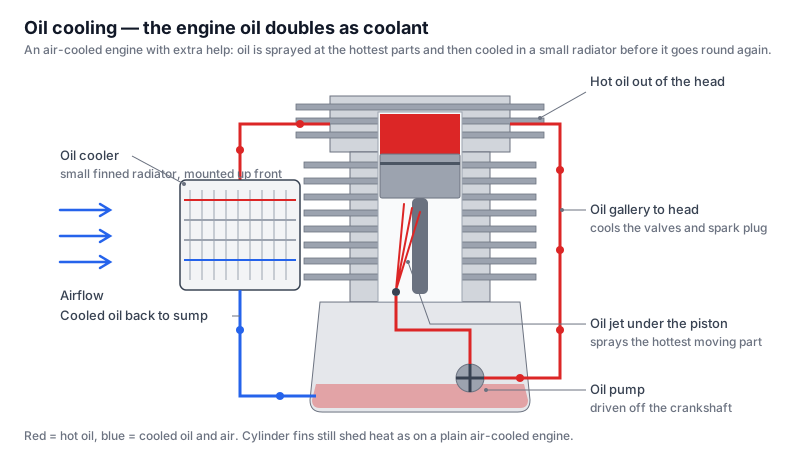
The oil pump sends oil to the head and a jet under the piston; hot oil (red) is cooled in a small front-mounted oil cooler before returning to the sump. 
A motorcycle oil cooler: a small finned radiator with the oil lines running to the engine.Photo: Pwiszowaty · CC BY-SA 3.0 · Commons driving 4 answers compares air-cooled, oil-cooled and water-cooled engines.Video: driving 4 answers
How it works
Oil cooling sits halfway between air and liquid cooling. The engine still has fins and relies on passing air for much of its cooling, but it also uses its own lubricating oil as a coolant. The oil pump pushes more oil than lubrication alone needs through galleries to the cylinder head, where the valves and spark plug area run hottest, and in many designs sprays a jet at the underside of the piston. The oil picks up heat and returns to the sump, and on its way it passes through an oil cooler: a small finned radiator, usually mounted in front of the engine below the headlamp.
- The pump draws oil from the sump.
- Oil is sent to the head and the piston jet, absorbing heat.
- Hot oil flows to the oil cooler, where airflow strips the heat.
- Cooled oil returns to the sump and the cycle repeats.
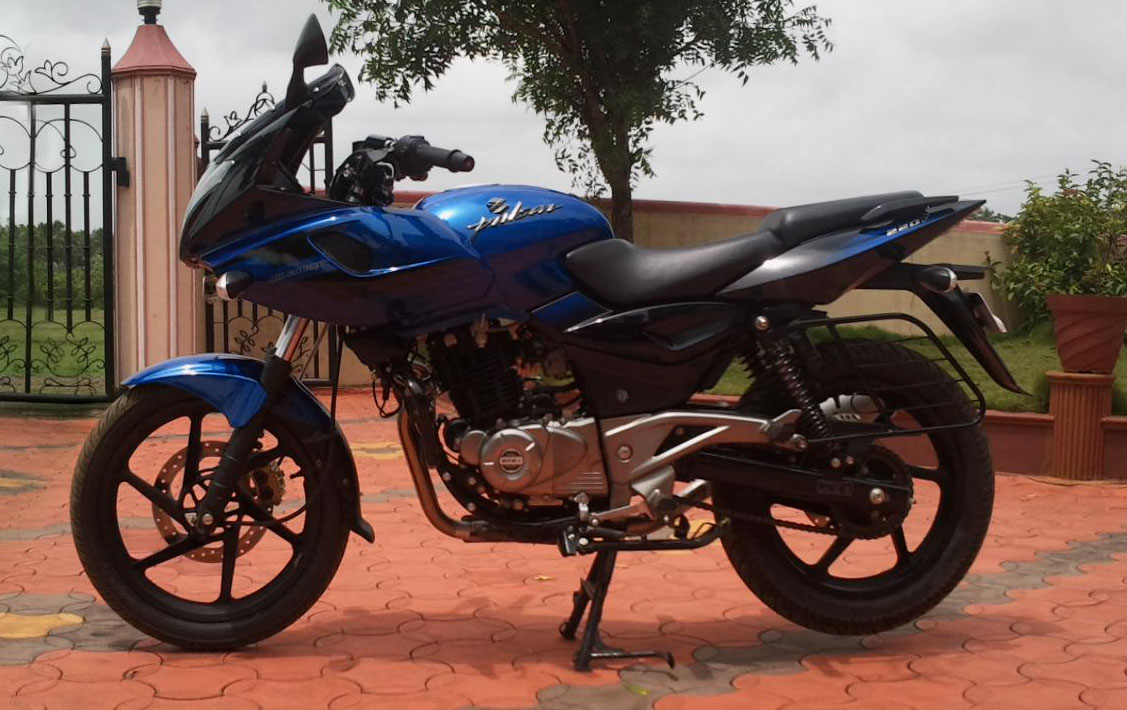
The result is a more stable engine temperature than plain air cooling without the cost, weight and complexity of a water pump, radiator, thermostat and hoses. It suits the 150 to 250 cc sporty commuter class, and India has many examples: the TVS Apache RTR 160 4V and 200 4V, Bajaj Pulsar 220F, Suzuki Gixxer SF 250 and Royal Enfield's 350s, which the company calls air-oil cooled. The rider notices little except that the bike copes better with hot traffic and sustained highway speeds than an air-cooled equivalent; performance still tapers on very hot days. Because the oil does double duty, oil grade and change intervals matter more than on a plain air-cooled engine, and a clogged or damaged oil cooler shows up quickly as rising engine heat.
Pros
- Steadier temperatures than plain air cooling
- Cheaper and lighter than a liquid system
- Few extra parts to fail
Cons
- Still depends on airflow in traffic
- Oil quality and change intervals matter more
- Cannot support the outputs of liquid-cooled engines
Vehicles with this component
16 models on sale or coming. The note after the price is what the spec sheet says about this component; a variant name in brackets means only that trim brings it.
Motorcycles 16
 Bajaj Auto Avenger Cruise 220₹1.34 lakhPhoto: Anderson Whale · CC BY-SA 4.0 · Wikimedia CommonsLaunched 1 Mar 2020launched
- Bajaj Auto Avenger Street 220₹1.34 lakhLaunched 1 Mar 2020launched